4,7 / 5

 Tactical Clothing
 Tactical Gear
 Airsoft Parts & Upgrades
 Airsoft Accessories
 Magazines
 Ammunition & Gas
 Survival & Outdoor
 New Arrivals
 Outlet
Poncho
Anyone looking to buy a poncho for airsoft, milsim, bushcraft or outdoor use will soon realise that not every poncho offers the same level of protection. Differences in material, pack volume, ventilation and coverage determine how comfortable you remain in the rain, wind and during prolonged use in the field. A high-quality poncho protects not only the user, but also equipment such as backpacks, plate carriers and other tactical gear.
For many players, an airsoft rain poncho is a practical solution, as it keeps both the wearer and their gear dry in the event of unexpected weather.
Go straight to the information you need:
• Which poncho suits your playing style?
• Fit and ergonomics
• Budget versus Premium Ponchos
• Colours and camouflage patterns: when should you choose which?
• Frequently asked questions
The difference between basic and high-quality ponchos lies in the material, construction and ease of use. PVC ponchos are completely waterproof, but they trap moisture and quickly feel clammy. Nylon and polyester versions offer a better balance between waterproofing, breathability and durability. Softshell ponchos offer greater comfort and freedom of movement, but are less suitable for prolonged rain.
A modern military poncho or tactical poncho is not only used as protection against the rain, but also as part of a versatile outdoor or milsim kit. Thanks to its roomy design, both the wearer and the gear underneath remain protected in changing weather conditions.
Ponchos are available in a wide range of styles, from compact emergency ponchos to robust models designed for prolonged use in rainy conditions.
Which poncho suits your playing style?
| Type: Poncho | Water resistance | Pack volume (compression) | Best effort |
|---|---|---|---|
| Lightweight (PVC) | On average | Compact (roll format) | Short showers & emergency use |
| Recon (Polyester) | Hoog | Very compact (pouch) | Day events & active exercise |
| Heavy Duty (Nylon) | Very high | Medium (backpack size) | Milsim & heavy rainfall |
| Softshell poncho | Water-repellent | On average | Light rain & tactical comfort |
The right choice depends on the circumstances and the duration of your assignment.
- Outdoor day events: Fostex Recon polyester poncho, offering a good balance between water repellency and breathability
- MilSim and multi-day events: Fostex Heavy nylon poncho, fully waterproof and suitable for prolonged rain
- Professional and tactical use: focus on durability, low-noise materials and full coverage of your gear
For most users, a polyester or nylon poncho offers the best balance between protection, ventilation and pack size. Lightweight PVC models are particularly suitable as a stopgap solution, whilst heavy-duty nylon ponchos perform better in prolonged rain and multi-day milsim events.
Don’t just look for waterproofing, but also consider ventilation and length. A poncho that is too short will allow water to seep through your gear, whilst a model that is too heavy will restrict your freedom of movement.
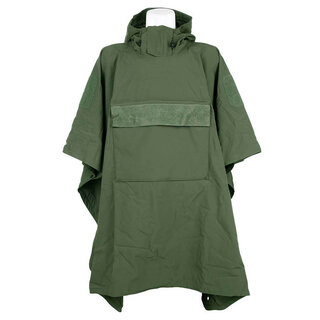
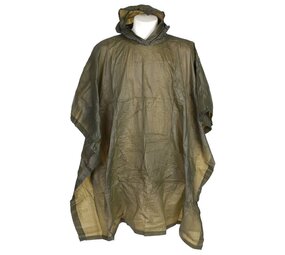
Fostex offers a clear product range: the Lightweight (PVC) is functional and budget-friendly, the Recon (polyester) is suitable for all-round use, and the Heavy (nylon) is designed for prolonged and demanding conditions. 101Inc. focuses on comfort and light rain with its softshell ponchos.
Fit and ergonomics
A poncho does not have a fixed fit like a coat, but its length and cut determine how comfortable it is to wear. A poncho that is too loose may flap about when you move, causing unwanted noise.
Make sure you have plenty of freedom of movement when performing actions such as aiming or reloading. A well-designed poncho does not restrict these movements and remains stable over your gear. A high-quality airsoft poncho stands out from standard rain ponchos thanks to a better balance between coverage, ventilation and durability. These differences become particularly noticeable when used with additional gear. Think of chest rigs, rucksacks or other loadout components that require extra freedom of movement and coverage.
Budget vs Premium Ponchos
Entry-level models often provide sufficient protection for occasional use and emergencies. As a poncho is used more frequently, differences become apparent in terms of waterproofing, durability, pack size and comfort.
Premium ponchos are distinguished by their stronger materials, superior finish and a construction that can withstand prolonged exposure to rain and heavy use. High-quality models also stay in place more securely over bulky equipment and offer greater comfort during prolonged use.
For regular users, a high-quality poncho is often an investment that pays for itself in terms of reliability, durability and ease of use.
Colours and camouflage patterns: when should you choose which?
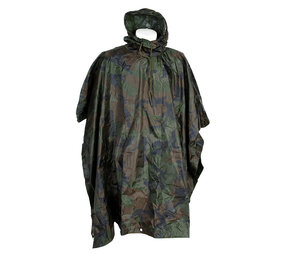
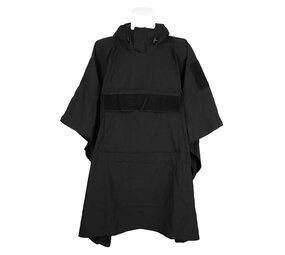
Whether you choose a solid colour or camouflage has a direct impact on your visibility in the field. Dark colours such as black and grey stand out more easily in natural environments due to a lack of variation and contrast.
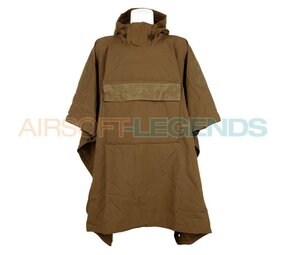
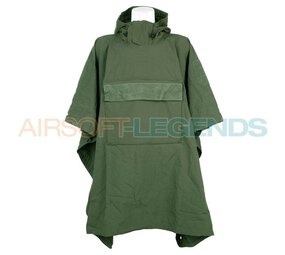
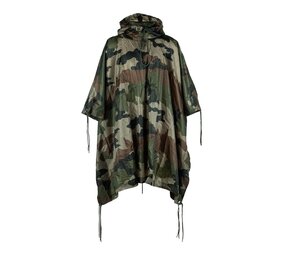
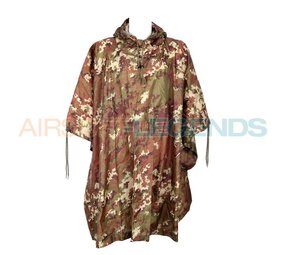
In wooded environments, camouflage patterns such as woodland or OD green work better because they break up the silhouette. In open or arid areas, lighter shades are more effective. Many users initially opt for black because of its neutral appearance. For woodland, milsim and outdoor use, OD Green, Woodland and other military colour schemes generally blend in better with the surroundings and existing loadouts.
The finish of the material also plays a role. Shiny materials can cause glare in wet weather, whereas nylon and matt polyester variants minimise this.
Common mistakes when choosing a poncho
- Focusing solely on waterproofing and neglecting ventilation.
- Choosing a poncho that is too short, leaving rucksacks or gear unprotected.
- Using an emergency poncho for prolonged use.
- Do not take the package volume into account during transport.
- Base your choice of colour on appearance rather than the environment in which it will be used.
A good poncho isn’t just about protection from the rain, but also about ventilation, freedom of movement and compatibility with your kit.
Frequently Asked Questions
Are ponchos better than hardshell jackets?
Ponchos offer better ventilation and more room for gear, whilst hardshell jackets provide a better seal and are quieter. The choice depends on how you intend to use them and the conditions.
What is the difference between a military poncho and a standard rain poncho?
Military ponchos are designed for prolonged use, greater freedom of movement and compatibility with equipment such as rucksacks and tactical gear. Standard rain ponchos are primarily intended for occasional use.
Is a poncho suitable for airsoft?
Yes. A poncho offers a practical combination of ventilation, protection and cover for your entire kit, particularly during outdoor skirmishes and milsim events.
Which poncho is best suited for milsim?
For multi-day milsim events, nylon ponchos are generally the best choice due to their durability, waterproofing and reliability in harsh conditions.
Can a poncho be worn over a rucksack?
Yes. High-quality ponchos, in particular, are designed to fully cover both the wearer and a rucksack or other equipment.
Can a poncho also be used as emergency shelter?
Some military and tactical ponchos have attachment points, allowing them to be used temporarily as a shelter or emergency shelter. This makes them popular for bushcraft, survival and multi-day outdoor activities.
Which poncho is suitable for heavy rain?
The Fostex Heavy poncho, made from 100% nylon, is suitable for prolonged and heavy rainfall.
Can I wear a poncho with my gear?
Yes, a poncho is specifically designed to be worn over a plate carrier, chest rig and rucksack.
Is a softshell poncho waterproof?
No, it is water-repellent and suitable for light rain, but not for prolonged downpours.
What is the biggest advantage of a poncho?
Versatility. Quick to put on and take off, full coverage over your gear and immediate protection against the weather.
With our ponchos, you’re choosing a practical solution that combines protection, ventilation and freedom of movement in all conditions.
- Free shipping from €99 (NL and BE)
- Visit our shop in Capelle aan den IJssel
- Returns within 14 working days