4,7 / 5

 Tactical Clothing
 Tactical Gear
 Airsoft Parts & Upgrades
 Airsoft Accessories
 Magazines
 Ammunition & Gas
 Survival & Outdoor
 New Arrivals
 Outlet
Fuses
A fuse is one of the most important safety components in the electrical system of an AEG. Although it is a small and relatively inexpensive component, a fuse protects the wiring, connectors, MOSFET and other electronic components from damage caused by overloading or short circuits. Should a fault occur, the fuse is designed to interrupt the circuit in good time, thereby preventing further damage to the replica.
Go straight to the right information:
• Why choose a high-quality fuse?
• What exactly does a fuse do?
• Why does a fuse blow?
• Which fuse do you need?
• What do 15A, 20A, 25A, 30A and 40A mean?
• Why shouldn’t you remove a fuse?
• Top brands for fuses
• Professional use
• What should you look out for when buying fuses?
• Frequently asked questions about fuses
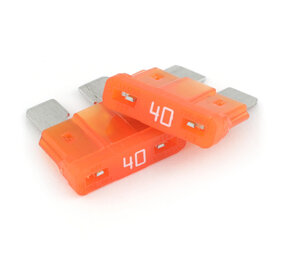
In this category, you’ll find high-quality fuses from Gate, Nimrod and Prometheus. The range comprises Mini Fuses, Normal Fuses and Glass-type Fuses in various amperages from 15A to 40A. Whether you want to replace a faulty fuse or take a spare with you to the playing field, you’ll find the right fuse for your AEG here.
Why choose a high-quality fuse?
A fuse may seem like a simple component, but it plays a vital role in protecting the entire electrical system. The right fuse helps to prevent damage to valuable components should an electrical fault occur.
| Type | Best use | Main advantage |
|---|---|---|
| Mini Fuse | Modern AEGs | Compact protection for the electrical installation |
| Normal Fuse | Various AEG platforms | Commonly used standard fuse |
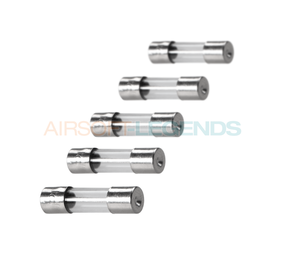
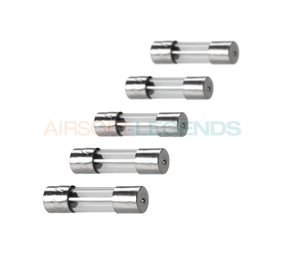
| Glass Type Fuse | Older replicas | Easy to replace and clearly visible when burnt out |
By using a fuse of the correct size and amperage, the electrical system remains protected without affecting the normal operation of the replica.
What exactly does a fuse do?
A fuse is designed to automatically interrupt the electrical circuit when an excessive current flows. This can happen, for example, in the event of a short circuit, a faulty component or another electrical fault.
Rather than the full load being placed on the wiring, MOSFET or motor, the fuse will blow first. This prevents more expensive components from being damaged and indicates that there is a problem somewhere in the electrical installation.
That is precisely why a fuse is not a component that affects the performance of a replica, but an important safety feature that helps to protect the lifespan of the electronics.
Why does a fuse blow?
A fuse almost never blows for no reason. When this does happen, it is usually a sign that there is a fault or overload somewhere in the electrical system.
Common causes include:
- A short circuit in the wiring.
- Damaged cable insulation.
- A seized or faulty engine.
- Problems with a MOSFET or other electronic component.
- An incorrectly connected battery or connector.
Replacing a blown fuse does not usually resolve the root cause of the problem. If a new fuse blows again straight away, it is advisable to check the entire electrical system before using the appliance again.
Which fuse do you need?
Not every AEG uses the same type of fuse. That is why it is important to first check which type was originally fitted in your replica. A fuse must not only have the correct amperage, but also the correct size.
Within this category, you’ll find a range of different models:
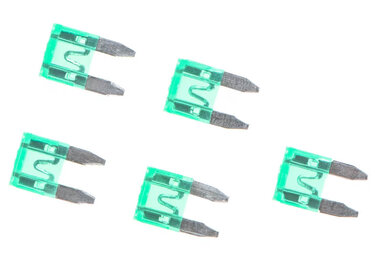
- Mini Fuse – A compact plug-in fuse commonly found in modern AEGs.
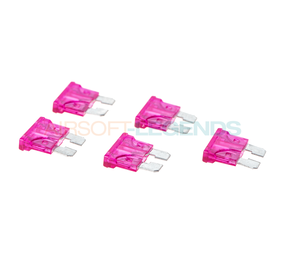
- Normal Fuse – The standard plug-in fuse used on various replicas.
- Glass Type Fuse – A glass fuse that is mainly found in older replicas or specific electrical configurations.
By choosing the same type as the original fuse, you can be sure that it will fit correctly in the fuse holder and continue to provide optimum protection for the electrical installation.
What do 15A, 20A, 25A, 30A or 40A mean?
The amperage of a fuse indicates the maximum current it can handle before the circuit is interrupted. This is not an indication of performance, but a safety rating tailored to the replica’s electrical installation.
You should therefore always use a fuse with the specified amperage. Fitting a higher-amp fuse simply because the original one has blown is not a solution. This could actually leave the electrical system less well protected should a fault occur again.
Are you unsure which amperage is suitable for your replica? If so, check the manufacturer’s specifications or see which fuse was originally fitted.
Why shouldn’t you remove a fuse?
It is sometimes thought that a replica performs better without a fuse, or that removing it is a quick fix when it keeps blowing. In practice, the opposite is true.
A fuse is specifically designed to prevent damage to the electrical system. If you remove it, the consequences of a fault do not disappear; only the protection is removed. In the event of a short circuit or overload, this can result in damage to components such as the wiring, MOSFETs, connectors or even the motorr.
Does a fuse blow regularly? If so, try to find the cause of the problem first, rather than simply removing the fuse.
Leading brands in fuses
In this category, you’ll find fuses from manufacturers renowned for their reliable quality.
Gate, Nimrod and Prometheus supply fuses suitable for a wide range of AEG platforms and electrical configurations. Whether you’re replacing a faulty fuse or adding a spare to your kit, a high-quality fuse helps to provide optimum protection for your replica’s electrical system.
Practical tip
Does a new fuse blow straight away? If so, don’t automatically fit a fuse with a higher amperage. First check the wiring, motor, MOSFET and connectors. A fuse is designed to highlight an electrical problem, not to hide it.
Bring spare fuses
A fuse takes up hardly any space, but can make a big difference during a skirmish. That’s why many experienced players keep one or more spare fuses in their toolbox or gear bag.
If a fuse needs replacing whilst you’re out and about and the problem is easily fixed, you can often get back to playing in no time. Of course, once you’ve replaced it, always check that the replica is working normally again and that the fuse doesn’t blow straight away.
Professional use
In professional maintenance, a blown fuse is never regarded as the actual problem, but rather as an indication that there is a fault somewhere in the electrical system. Experienced airsoft technicians therefore check the entire electrical system first before fitting a new fuse.
What should you look out for when buying fuses?
Before you buy a new fuse, it is a good idea to check the specifications of the original fuse first.
In this regard, please bear in mind, amongst other things:
- The correct type of fuse (Mini Fuse, Normal Fuse or Glass-type Fuse).
- The correct amperage (15A to 40A).
- Compatibility with the fuse holder on your replica.
- The quality of the fuse.
- Whether you want to take a spare fuse with you for the journey.
By choosing the right fuse, you can ensure that your AEG’s electrical system remains fully protected and prevent unnecessary damage to other electronic components.
Fuses in AEG Electronics & MOSFETs
A fuse forms the first layer of protection in your AEG’s electrical system. In the event of an overload or short circuit, the fuse interrupts the circuit, thereby minimising damage to components such as the wiring, connectors, MOSFET or motor. A correctly selected fuse therefore contributes to the safe and reliable operation of the entire replica.
Are you in the process of maintaining or upgrading the electronics in your AEG? Then take a look at our AEG Electronics & MOSFETs category, where, as well as fuses, you’ll find MOSFETs, switches, wire sets and connectors to ensure a complete and reliable electrical installation.
Common mistakes
Replacing a fuse may seem simple, but it is precisely here that mistakes are often made, making the electrical installation unnecessarily vulnerable.
Common mistakes include:
- Fit a fuse with a higher amperage because the original one has blown.
- Completely remove the fuse on the assumption that this will improve the replica’s performance.
- Simply replacing the fuse without investigating the cause of the problem.
- Confusing a Mini Fuse, a Normal Fuse or a Glass-type Fuse.
- Do not bring a spare fuse with you during a skirmish.
By first identifying the cause of a fault and always using the correct fuse, the electrical installation remains fully protected.
Frequently Asked Questions about Fuses
Why does my fuse keep blowing?
A fuse usually blows as a result of an electrical problem, such as a short circuit, damaged wiring, a faulty motor or a fault in the MOSFET. Simply replacing the fuse does not usually resolve the underlying cause.
Can I fit a higher-amp fuse?
This is not recommended. A fuse is designed to match the replica’s electrical system. A higher amp rating could cause other components to be damaged before the fuse trips.
Can I play without a fuse?
Technically, this is possible with some replicas, but it is not recommended. Without a fuse, an important safety feature of the electrical system is removed, which means that damage in the event of a fault could be considerably greater.
What is the difference between a Mini Fuse, a Normal Fuse and a Glass-type Fuse?
The main difference lies in their design and dimensions. Which fuse is suitable depends on the fuse holder and the electrical system of your replica.
Is it a good idea to bring spare fuses?
Yes. A fuse takes up hardly any space and can ensure that, once you’ve fixed a simple fault, you can get back to playing quickly.
Advice from Airsoft-Legends
A fuse may be one of the smallest components in an AEG, but it is also one of the most important safety features of the entire electrical installation. By using the correct fuse and not only replacing a blown fuse but also identifying the cause, you can prevent unnecessary damage to valuable electronic components.
Our advice is to always carry one or more spare fuses in your toolbox or gear bag, and to use only a fuse with the correct type and ampere rating. If a fuse blows repeatedly, investigate the cause first before using the spare again.
With high-quality fuses from Gate, Nimrod and Prometheus, you can protect your AEG’s electrical system against overloads and short circuits. Whether you choose a Mini Fuse, Normal Fuse or Glass Type Fuse in 15A to 40A, the right fuse helps prevent damage and contributes to the safe and reliable operation of your replica.


- Free shipping from €99 (NL and BE)
- Visit our shop in Capelle aan den IJssel
- Returns within 14 working days