4,7 / 5


 Tactical Clothing
 Tactical Gear
 Airsoft Parts & Upgrades
 Airsoft Accessories
 Magazines
 Ammunition & Gas
 Survival & Outdoor
 New Arrivals
 Outlet
HPA Engines
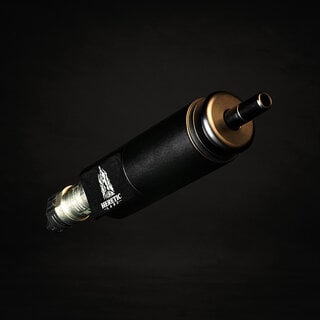
HPA Engines form the heart of an HPA-powered airsoft replica. Instead of the traditional combination of motor, gears, piston and spring, an HPA Engine uses regulated compressed air to fire the BB. This creates a propulsion system in which the air supply can be controlled with great precision and which eliminates the need for many of the mechanical components found in a conventional AEG drive system.
Go straight to the relevant information:
• Why choose an HPA engine?
• What types of HPA engines are there?
• What does an HPA engine do during a firing cycle?
• What is the difference between a single- and dual-solenoid HPA Engine?
• The leading HPA Engine brands
• Maxx Model Aluminium Threaded Front Housings
• Which HPA engine is suitable for your replica?
• How can you tell if an HPA engine is not properly adjusted?
• What should you look out for when installing an HPA engine?
• Tuning an electronic HPA engine
• Tuning a mechanical HPA engine
• Professional tuning and maintenance of HPA engines
• What should you look out for when buying an HPA engine?
• Frequently asked questions about HPA engines
At Airsoft-Legends, you’ll find HPA engines from Gate, PolarStar, Storm Airsoft and Wolverine. This category features various systems for converting suitable airsoft replicas to HPA, ranging from electronically controlled engines to fully mechanical solutions. You’ll also find a selection of specialised Maxx Model Aluminium Threaded Front Housings for specific HPA engines. These are not complete engines, but technical components for existing systems from brands such as Wolverine and PolarStar.
Why choose an HPA Engine?
In a traditional AEG, an electric motor is used to tension a piston and spring via gears. An HPA Engine replaces a large part of this mechanical drive with a pneumatic system that uses regulated compressed air to fire the shot.
This results in a different drive system in which the amount of mechanical movement within the gearbox is significantly reduced. Depending on the engine selected, it is also possible to achieve extensive control over the system’s operation and timing.
| Merk | Product group / Models | Features & Applications |
|---|---|---|
| PolarStar | F2, Jack, Kythera, Fusion Engine | Electro-pneumatic and fully mechanical drop-in systems for various gearbox versions. |
| Wolverine | Inferno Gen 2, Hydra, Reaper | Reliable drop-in engines with variable nozzle options (AEG and MTW-specific). |
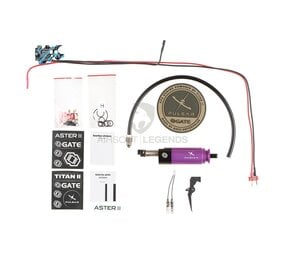
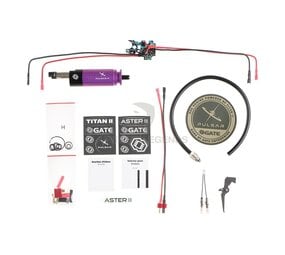
| Gate | Pulsar S, Pulsar D2, Pulsar H | Compact HPA engines which, depending on the version, work in conjunction with gate electronics such as ASTER II and TITAN II Bluetooth for electronic control and configuration. |
| Storm | HP-R Storm System | Specialised HPA systems for a constant airflow and rapid trigger response. |
| Maxx Model(Exception) | CNC Aluminium Threaded Front Housings | Replacement housings for Inferno XTS, Inferno Gen 2 (MTW & AEG), PolarStar Kythera and PolarStar F2 for optimum alignment with Maxx hop-up chambers. |
Different manufacturers each take their own approach to this. PolarStar offers both electro-pneumatic systems and a fully mechanical Kythera; Wolverine focuses on various drop-in engines with a range of nozzle options; Gate combines compact HPA engines with advanced electronic control; and Storm offers specific HPA solutions designed to ensure a constant air flow and rapid trigger response.
What types of HPA engines are there?
Within HPA Engines, the main distinction is between electronically controlled and fully mechanical systems. Both use regulated compressed air as the power source, but the way in which the valve is activated and controlled differs.
Electronic HPA engines
In an electronic HPA Engine, the pneumatic operation is controlled electrically. A trigger input is detected by sensors or electronic components, after which one or more solenoids activate the air cycle.
There are various designs within this group. The PolarStar F2, Jack and Fusion Engine are examples of electro-pneumatic systems, whilst the Gate Pulsar S, Pulsar D2 and Pulsar H, on the other hand, are very compact in design and work in conjunction with Gate’s electronic control system.
Gate uses, amongst other things, optical sensors and systems such as ASTER and TITAN, allowing settings to be adjusted via the accompanying software or app. This makes it possible to control various functions of the HPA build electronically.
Wolverine and Storm also offer electronically controlled HPA solutions in which the air cycle is regulated by the system in question.
Mechanical HPA engines
A mechanical HPA engine does not require an electronic FCU to trigger each shot. The trigger directly operates the internal mechanism that releases the air.
A well-known example of this is the PolarStar Kythera. This system is entirely mechanical in design and operates without a battery or electronic trigger control.
Mechanical systems therefore have a different operating and adjustment method to electronic engines. They particularly appeal to players who want a pneumatic system without having to rely on an FCU and a battery.
What does an HPA engine do during the firing cycle?
An HPA Engine receives regulated compressed air from an external air supply. The compressed air is stored in an HPA cylinder and fed to the Engine via a suitable regulator and air hose. When the trigger is pulled, the Engine controls the loading and firing cycle in accordance with the design of the system in question.
Broadly speaking, the cycle proceeds as follows:
- The regulator supplies compressed air at a controlled operating pressure to the engine.
- The trigger activates the mechanical or electronic firing mechanism.
- The nozzle positions the BB towards the hop-up chamber.
- The engine releases a controlled amount of compressed air.
- After the shot, the system returns to its starting position for the next cycle.
How these steps are carried out internally varies from one engine to another. Some systems use a single solenoid, whilst others can control multiple pneumatic functions individually.
What is the difference between single- and dual-solenoid HPA engines?
With electronic HPA engines, a distinction is often made between single- and dual-solenoid systems. This mainly relates to the way in which nozzle movement and air delivery are controlled.
Single-solenoid Engines
A single-solenoid engine uses a single electrically controlled air valve for the pneumatic cycle. The internal design of the engine then determines how the nozzle and air delivery interact within this cycle.
The PolarStar Jack and various compact HPA systems are examples of this approach, which combines a relatively simple pneumatic design with electronic control.
Dual-solenoid Engines
In a dual-solenoid system, different parts of the cycle can be controlled individually. This provides greater control over the timing of, for example, nozzle movement and air discharge.
The PolarStar F2 is a well-known example of an HPA engine in which two solenoids are used to control these functions more independently.
However, the presence of two solenoids does not automatically make an Engine the best choice for every build. The difference lies mainly in the extent to which the pneumatic cycle can be controlled and fine-tuned.
The leading HPA Engine brands
Within this category, the various brands each represent a different approach to HPA propulsion.
PolarStar
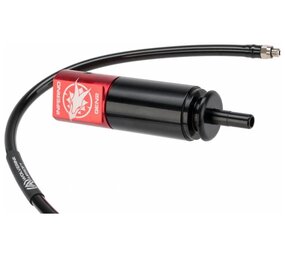
PolarStar is one of the best-known manufacturers of HPA systems and offers several Engine platforms. The range includes, amongst others, the F2, Jack, Kythera and Fusion Engine.
The F2, Jack and Fusion Engine are electro-pneumatic systems, whilst the Kythera is controlled entirely mechanically. As a result, PolarStar offers solutions both for players seeking extensive electronic adjustment and for users who, on the other hand, prefer to work without electronics.
The systems are available for various gearbox versions and applications.
Wolverine
Wolverine’s range includes the Inferno Gen 2, Hydra and Reaper. These engines have been developed as HPA solutions for various airsoft platforms and, depending on the model, can utilise different nozzle configurations.
Wolverine offers both solutions for traditional AEG conversions and systems specifically designed for the MTW platform.
Gate
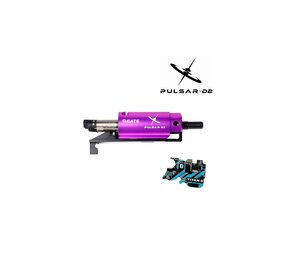
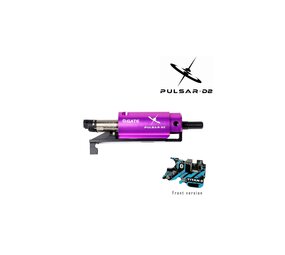
Gate combines HPA technology with the electronic expertise for which the brand is renowned in the airsoft world. The main models in this category are the Pulsar S and Pulsar D2.
These engines are very compact in design and work in conjunction with Gate electronics such as ASTER and TITAN. Optical sensors and app-based settings make it possible to control various functions of the system electronically.
Storm
With the HP-R Storm System, Storm Airsoft offers electronically controlled HPA engines for compatible AEG platforms. The range includes various models, including a ‘Semi Only’ version.
The systems use regulated compressed air and electronic controls to regulate the firing cycle. The exact setting options and compatibility vary depending on the model and are therefore explained at product level.
Maxx Model Aluminium Threaded Front Housings
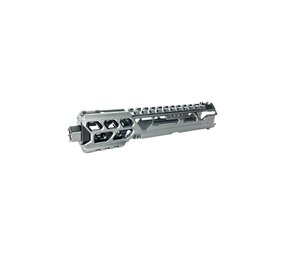
As well as complete HPA engines, this category also includes Maxx Model Aluminium Threaded Front Housings. These products are deliberately an exception within the category: they are not complete HPA engines, but replacement front housings for specific existing systems.
The available versions are intended for:
- Wolverine Inferno XTS
- Wolverine Inferno Gen 2 MTW
- Wolverine Inferno Gen 2 AEG
- PolarStar Kythera
- PolarStar F2
The Maxx Model Front Housings are made from CNC-machined aluminium and feature a threaded design. They have been developed to ensure that the relevant HPA Engine aligns precisely with compatible Maxx Model hop-up chambers.
This makes these parts particularly relevant for HPA builds, where the connection and alignment between the engine and the hop-up unit are carefully engineered.
Practical tip
When choosing an HPA engine, first decide which type of system you want: electronic or fully mechanical. You can then make a much more targeted comparison between, for example, a PolarStar F2 or Jack, a Wolverine Inferno, a Gate Pulsar or a mechanical PolarStar Kythera, without having to constantly compare the features of completely different systems side by side.
Which HPA Engine is right for your replica?
The choice of an HPA engine is primarily determined by the replica’s internal design. In many conversions, an engine is fitted into an existing gearbox shell, but not every engine is designed for the same gearbox version, nozzle position or platform configuration.
That is why it is wise to base your choice properly, from the outset, on the platform you wish to convert. You can then compare suitable systems based on features such as mechanical or electronic control, adjustment options and the desired trigger response.
HPA Engines for AEG conversions
In an AEG conversion, a large part of the original drive system is removed from the gearbox and replaced with an HPA engine. In many builds, the gearbox shell continues to serve as the housing and as the mounting base for the engine, trigger and nozzle.
Systems such as the PolarStar F2, PolarStar Jack, Wolverine Inferno Gen 2 and Gate Pulsar can be used with various AEG platforms, depending on the version. The exact configuration is determined by the gearbox version and the required nozzle.
In such a conversion, components such as the hop-up unit, inner barrel and magazine feed remain part of the original platform. The HPA Engine must work in close coordination with these to load the BB correctly and direct the air properly towards the barrel.
HPA Engines for MTW platforms
The Wolverine range also includes systems and parts developed specifically for the MTW platform. An MTW is built from the ground up as an HPA replica and therefore differs from a traditional AEG that is subsequently converted to HPA.
As a result, the housing, nozzle configuration and positioning of components may also differ from those of a standard gearbox conversion.
When looking for parts for an MTW, it is therefore important to base your search on the specific MTW model rather than using parts for a traditional AEG build as a reference.
Engines for non-standard nozzle positions
Not every replica uses the same nozzle position. Some platforms have a different gearbox design or a nozzle that is not aligned in the same way as in a standard V2 or V3 build.
There are specialised systems available for such applications, such as certain models within the Wolverine Hydra range.
Engines of this type are primarily designed to enable HPA in replicas where a conventional straight engine layout is not suitable.
How can you tell if an HPA engine is not properly tuned?
An HPA Engine may be fitted correctly from a technical point of view and still not function optimally. In such cases, the cause is often not a faulty component, but an incorrect combination of air pressure, nozzle movement, dwell time or electronic settings.
The symptoms vary from one system to another, but certain problems occur regularly.
For example, please note:
- Irregular FPS between consecutive shots.
- BBs that are not loaded correctly every cycle.
- A replica that occasionally fires blanks whilst the magazine still contains BBs.
- Unnecessarily high air consumption.
- A noticeably strong or, conversely, weak gust of wind.
- Feeding problems that only occur at a higher rate of fire.
- A nozzle that does not move fully or at the right time.
Not every fault needs to be resolved straight away using an electronic adjustment. In the case of feeding problems, for example, it is advisable first to check whether the nozzle is moving correctly and is properly connected to the hop-up unit.
Once the mechanical fundamentals are in order, attention can then be turned to fine-tuning the engine.
What should you bear in mind when installing an HPA Engine?
Fitting an HPA engine requires more than simply removing the original gearbox components and installing the new engine. The position of the nozzle, its alignment with the hop-up unit and the free movement of the various components play a significant role in determining how reliably the replica ultimately performs.
Please note the following points during installation:
- Remove all components that are no longer required, as specified in the installation instructions for the relevant engine.
- Check that the engine is positioned securely and straight within the gearbox shell or housing.
- Check the alignment of the nozzle in relation to the hop-up unit.
- Make sure the nozzle can move freely without coming into contact with the hop-up chamber or any other parts.
- Route the air hose so that it is not pinched when the gearbox or grip is fitted.
- For electronic systems, check the positioning of the trigger board, sensors and cabling.
- Make sure that cables are not trapped between the gearbox halves or other components.
- Test the mechanical operation before the replica is fully assembled.
Incorrect nozzle alignment can lead to misfeeds, air leaks or damage to components. You should therefore pay particular attention to the physical position of the Engine during assembly before you start fine-tuning the air pressure or electronics.
Nozzle alignment and hop-up connection
The nozzle forms the connection between the HPA Engine and the hop-up chamber. During each cycle, it must load the BB correctly and then seal it sufficiently to direct the air towards the inner barrel.
If the nozzle is positioned too high, too low or at an angle to the hop-up unit, this can affect both feeding and airtightness. You should therefore check after assembly that the nozzle moves centrally through the opening of the hop-up chamber. The movement must be smooth, with no visible contact with the edges of the hop-up unit.
This is also where specialised parts such as the Maxx Model Threaded Front Housings may be relevant for the HPA engines and Maxx hop-up configurations for which they are intended.
Tuning an electronic HPA engine
Depending on the system, electronic HPA engines offer various adjustment options. This allows the engine’s operation to be fine-tuned more precisely to the replica.
Common settings relate to matters such as:
- Dwell.
- Nozzle timing.
- Rate of Fire.
- Semi-automatic and fully automatic settings.
- Triggerrespons.
- Burst- of fire-selectorfuncties.
The settings available vary greatly depending on the engine, FCU and manufacturer. For example, a PolarStar system is configured differently to a Gate Pulsar used in conjunction with ASTER or TITAN.
It is therefore not advisable to copy settings from a different HPA build on a one-to-one basis. The required values depend on the engine, barrel length, nozzle configuration, operating pressure and other components of the replica.
Dwell
In many electronic HPA engines, the dwell determines how long air is released during a shot. If the dwell is too short, there may not be enough air available to accelerate the BB efficiently through the barrel, whilst an unnecessarily long dwell may simply consume extra air.
The aim is therefore not to set the dwell time as high as possible, but to use a sufficient air flow to ensure consistent operation.
The exact setting varies depending on the build and must be fine-tuned step by step.
Nozzle timing
In engines where the nozzle timing can be controlled electronically, this setting determines when the nozzle moves within the cycle.
This becomes particularly relevant when a replica is used at higher rates of fire. The magazine spring must be given sufficient time to feed the next BB up before the nozzle moves forwards again.
As a result, incorrect timing can lead to misfeeds without there necessarily being anything wrong with the engine or the magazine.
Tuning a mechanical HPA engine
In a fully mechanical engine such as the PolarStar Kythera, the firing cycle is not controlled by an FCU. Its operation is determined by the system’s internal mechanical and pneumatic settings.
As a result, settings such as trigger sensitivity and reset can be adjusted differently to those on an electronic engine.
The advantage of this is a system that does not require an electronic trigger board or battery. On the other hand, adjustments must be made mechanically, and electronic settings such as rate of fire or programmable fire modes are not available.
For players who deliberately opt for a simple semi-automatic HPA setup, this may actually be appealing.
Professional tuning and maintenance of HPA engines
When it comes to professionally built HPA replicas, it is not just the desired power output that is taken into account. A good technician assesses the entire cycle from magazine to barrel, whilst striving to strike a balance between consistent feeding, air efficiency and reliable operation.
A logical adjustment process begins with correct mechanical assembly. The operating pressure is then set and, in the case of electronic engines, the relevant parameters are adjusted one by one. By changing only one setting at a time, it remains clear which adjustment is actually having an effect.
For routine maintenance, it is particularly important to keep the engine clean and to follow the manufacturer’s maintenance instructions. O-rings and internal seals can wear out over time, whilst contamination or unsuitable lubricants can affect pneumatic operation.
Do not dismantle a properly functioning engine unless absolutely necessary. When maintenance is required, use parts and lubricants suitable for the specific system and ensure that no dirt enters the engine via the air inlet.
Always disconnect the air supply before carrying out maintenance and depressurise the system in accordance with the manufacturer’s instructions. After assembly and adjustment, check the muzzle energy using a chronograph and observe the applicable field rules. At events covered by the NABV safety regulations, an HPA replica must also be fitted with a tournament lock or another verifiable device that prevents the muzzle energy from being adjusted during the event.
What should you look out for when buying an HPA engine?
If you’re looking to buy an HPA Engine, it’s important to first decide what type of system you’re after and which features are relevant to your build. For example, a fully mechanical PolarStar Kythera offers a very different user experience to an electronically controlled PolarStar F2, Wolverine Inferno or Gate Pulsar.
The choice is therefore not about which engine has the most features on paper, but about which system best suits the way you want to build and use your replica.
When selecting an HPA Engine, please bear the following points in mind:
- Control type: choose between an electronic or fully mechanical engine.
- Engine configuration: decide whether you want to use a single- or dual-solenoid system.
- Adjustment options: see how much control you want over functions such as dwell, nozzle timing and rate of fire.
- Electronics: for electronic systems, check which FCU, trigger board or control unit is being used.
- Battery usage: Mechanical engines do not require a battery for the firing cycle, whereas electronic systems generally do.
- Nozzle configuration: certain Engines are available with different nozzle options for a variety of replicas.
- Usage: decide whether you’re primarily looking for simplicity, extensive customisation options, a fast trigger response or a specific technical platform.
Ideally, you will have already established platform compatibility before you start comparing these features. From that point onwards, you can focus entirely on which type of HPA Engine best suits your preferences.
PolarStar F2, Jack, Kythera of Fusion Engine?
PolarStar offers a range of systems, each of which is distinctly different from the others.
The PolarStar Jack is a compact electro-pneumatic engine that uses a single solenoid. The system is of interest to players looking for a relatively simple electronic HPA solution.
The PolarStar F2 uses a dual-solenoid design, which allows different parts of the pneumatic cycle to be controlled separately. This provides more extensive options for adjusting nozzle movement and air output.
The PolarStar Kythera is a distinctly different option. This system is entirely mechanical and requires no FCU or battery for the firing cycle. As such, the Kythera is aimed primarily at players who specifically want a mechanical semi-automatic HPA build.
The Fusion Engine is a more comprehensive integrated HPA system in which several components are used together as a complete engine unit.
Which of these systems is the best choice therefore depends mainly on how much electronic control you want and how you intend to use the replica.
Wolverine Inferno, Hydra en Reaper
Wolverine offers a range of HPA engines, each with its own specific application.
The Inferno Gen 2 is a widely used drop-in engine for various AEG and MTW configurations and is available with a range of nozzle options.
The Hydra is particularly interesting for platforms where the nozzle position differs from the usual straight engine configuration. This means that HPA can also be used in replicas where a standard engine design is less suitable.
The Reaper represents yet another Engine concept within Wolverine and offers players an alternative for builds where the specific characteristics of this system are desirable.
The difference between these engines therefore lies not only in their performance, but above all in the way they are technically constructed and the replica architecture for which they are intended.
Gate Pulsar S on the Pulsar D2
The Gate Pulsar S and Pulsar D2 combine a highly compact HPA engine with Gate’s electronic ecosystems.
In conjunction with systems such as ASTER and TITAN, various settings can be managed electronically. Optical sensors detect how the replica is operated, and the available functions can be adjusted using the accompanying software.
The Pulsar series is therefore particularly appealing to players who wish to combine HPA with comprehensive electronic control and who like to manage various settings from a single Gate platform.
Storm HPA Engines
Storm offers its own HPA systems, including solutions based on the HP-R Storm System. These engines have been developed with a focus on consistent airflow and immediate trigger response.
Storm therefore offers an alternative for players who are looking for a specific HPA solution outside the larger PolarStar, Wolverine and Gate platforms.
The features and configuration options available vary depending on the Storm system, so we will cover these in more detail at product level.
HPA Engines within HPA Airsoft Parts
The HPA Engine is the central propulsion system in many HPA replicas, but it always operates as part of a larger configuration. The Engine receives regulated compressed air via an HPA cylinder, regulator and air line, and then uses this air to fire the BB.
With electronic engines, the FCU and HPA battery also play a role in controlling the system. Within HPA Airsoft Parts, you will therefore also find the other components you need to set up the complete air supply and electronic control system for an HPA build.
Common mistakes with HPA Engines
At HPA Engines, problems often arise because installation or adjustment is carried out too quickly. With electronic systems in particular, the range of available settings can tempt one to change several values at once.
These are common errors when installing and using HPA Engines:
- Changing several settings at once without first carrying out a reliable basic adjustment.
- Increasing the operating pressure when the problem is actually caused by dwell or nozzle timing.
- Setting a high rate of fire without taking the magazine’s feeding capacity into account.
- Do not check the nozzle position before adjusting the electronic settings.
- Do not pinch any cables or air hoses whilst closing the gearbox.
- Using an electronic engine without the correct type of battery or the specified electronics.
- Treat a mechanical engine as if it were set up in the same way as an electronic system.
- Completely dismantling an engine when the cause of a fault lies outside the engine.
- Purchase a Maxx Model Front Housing as if it were a standalone HPA engine.
By first checking the mechanical assembly and then adjusting the settings step by step, it becomes much clearer which change actually affects the operation.
Frequently Asked Questions about HPA Engines
What is an HPA Engine?
An HPA Engine is a pneumatic propulsion system that uses regulated compressed air to fire an airsoft replica. In many conversions, the Engine replaces, amongst other things, the traditional motor, gear, piston and spring drive of an AEG.
What is the difference between an electronic and a mechanical HPA Engine?
An electronic HPA Engine uses sensors, electronics and one or more solenoids to control the firing cycle. A mechanical Engine activates the cycle directly via a mechanical-pneumatic system and does not require an FCU for this purpose.
Does every HPA engine require a battery?
No. Electronic engines usually use a small battery to power the FCU or trigger electronics. Fully mechanical systems, such as the PolarStar Kythera, do not require a battery for the firing cycle.
What is the difference between a single-solenoid and a dual-solenoid engine?
A single-solenoid engine uses a single electrically controlled air valve for the pneumatic cycle. In a dual-solenoid engine, certain functions, such as nozzle movement and air discharge, can be controlled more independently. The PolarStar F2 is a well-known example of this.
What is dwell in an HPA engine?
In many electronic engines, dwell determines how long air is released during the shot. The correct setting must supply sufficient air for a reliable and efficient firing cycle without unnecessary air consumption.
Why does my HPA Engine use a lot of air?
High air consumption can be caused, amongst other things, by a dwell setting that is set too high, high operating pressure or inefficient adjustment. Air leaks or problems with the seal may also be a factor.
Can an HPA Engine cause feeding problems?
Yes, but not every feeding problem is caused by the Engine itself. Nozzle alignment, nozzle timing, magazine feed, hop-up adjustment and rate of fire can all affect feeding.
What is the difference between the PolarStar F2 and the Jack?
The Jack uses a single-solenoid design, whilst the F2 uses two solenoids and therefore offers more extensive options for controlling parts of the pneumatic cycle independently.
What makes the PolarStar Kythera special?
The Kythera is entirely mechanically controlled. This means that no FCU or battery is required to trigger the firing cycle. The system is designed for a mechanical semi-automatic HPA setup.
What are the Gate Pulsar S and Pulsar D2?
The Pulsar S and Pulsar D are compact HPA engines from Gate that work in conjunction with the brand’s electronic systems, including ASTER and TITAN. This allows various functions to be controlled and adjusted via the Gate electronics.
What are the Maxx Model Threaded Front Housings designed for?
These CNC-machined aluminium front housings replace the original front housings on specific HPA Engines and have been developed to fit precisely with compatible Maxx Model hop-up chambers. This category includes versions for the Wolverine Inferno XTS, Inferno Gen 2 MTW, Inferno Gen 2 AEG, and PolarStar Kythera and F2.
Which brands of HPA engines does Airsoft-Legends sell?
In this category, you’ll find HPA Engines from Gate, PolarStar, Storm and Wolverine. In addition, specific Maxx Model Front Housings are available for a number of Wolverine and PolarStar engines.
Advice from Airsoft-Legends
An HPA Engine largely determines how your HPA build is controlled. It is therefore advisable not to focus solely on the maximum range of settings, but rather on the type of system that suits your playing style.
If you’re looking for comprehensive electronic control, systems such as the PolarStar F2, various Wolverine Engines and Gate Pulsar offer a wide range of options. If, on the other hand, you’re looking for a fully mechanical solution without an FCU or battery, the PolarStar Kythera, for example, offers a completely different approach.
Our advice is to first ensure reliable basic operation after installation before you begin any extensive tuning. Make sure the nozzle is correctly aligned, the BBs are fed reliably and the system is operating without any air leaks. Only then should you optimise settings such as dwell, timing and rate of fire.
In our HPA Engines category, you’ll find systems from Gate, PolarStar, Storm and Wolverine, supplemented by specialised Maxx Model Aluminium Threaded Front Housings for specific HPA configurations.
Whether you want to convert an existing AEG to HPA, build a sophisticated electronically controlled set-up, or deliberately opt for a fully mechanical system: at Airsoft-Legends you’ll find HPA engines and the associated parts that will allow you to build and fine-tune your HPA replica to your exact specifications.
Deliverytime
Deliverytime
- Free shipping from €99 (NL and BE)
- Visit our shop in Capelle aan den IJssel
- Returns within 14 working days
Deliverytime