4,7 / 5

 Tactical Clothing
 Tactical Gear
 Airsoft Parts & Upgrades
 Airsoft Accessories
 Magazines
 Ammunition & Gas
 Survival & Outdoor
 New Arrivals
 Outlet
Eye & Face Protection
In airsoft, there is one piece of kit you should never skimp on: eye protection. Whilst a damaged magazine or a torn pouch can easily be replaced, the same cannot be said for your eyes. A single BB can cause serious or even permanent eye injury. That is why wearing high-quality, certified eye protection is compulsory at virtually every airsoft field.
Go straight to the information you need:
• Why you should never skimp on eye protection
• Which type of protection suits your playing style?
• Safety standards explained
• Safety spectacles, goggles or a full-face mask?
• Mesh mask or full-face mask?
• Which lens colour should you choose?
• Why do some safety glasses and goggles fog up?
• Maintenance of eye protection
• Knee and elbow protection
• Professional applications
• What should you look out for when choosing eye and face protection?
• Frequently asked questions
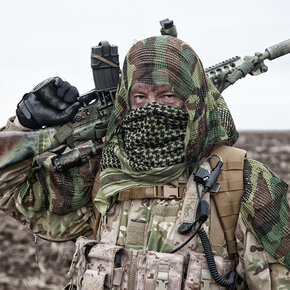
In the Eye & Face Protection category, you’ll find everything you need to protect yourself as effectively as possible during CQB, outdoor skirmishes and milsim events. This includes airsoft safety glasses, goggles, mesh masks, full-face masks, scarves, knee pads and elbow pads. Each type of protection has its own advantages and is suited to a specific playing style or situation.
Whilst safety goggles protect your eyes from BB impacts, a mesh mask prevents painful hits to the teeth and jaw. Full-face masks combine both forms of protection in a single unit and are therefore popular amongst novice players and during intense CQB games. Knee and elbow pads also enhance comfort when kneeling, taking cover and moving across rough terrain.
It is important to note that not all safety glasses are automatically suitable for airsoft. Only eye protection that complies with recognised safety standards is designed to withstand high-speed impacts. Further down this page, we explain in detail what certifications such as EN166, ANSI Z87.1+, MIL-PRF-32432A and STANAG 2920 mean and why they are so important.
Why you should never skimp on eye protection
In the world of airsoft, there is frequent talk of upgrades for replicas, plate carriers or communications equipment. Yet no investment is more important than good eye protection. You can replace a broken magazine or buy a new pair of trousers if they’re torn, but damaged eyes do not heal in the same way.
It is therefore advisable to choose only eye protection from reputable manufacturers who have their products tested in accordance with recognised safety standards. After all, glasses that look like tactical safety glasses are not automatically capable of withstanding the impact of an airsoft BB.
In recent years, extremely cheap “tactical glasses” have been appearing with increasing frequency on platforms such as AliExpress, Temu and other international online shops. Although these products are sometimes labelled with terms such as military, tactical or airsoft, in many cases there is no verifiable certification or independent testing. Without such certification, it is impossible to determine whether the lens can actually withstand the forces generated during an airsoft match.
So don’t be tempted by a low price or a cool design. Always check that safety glasses or goggles clearly state which safety standards they comply with. Reliable manufacturers list certifications such as EN166, ANSI Z87.1+, MIL-PRF-32432A or STANAG 2920 in their product specifications or on the frame itself.
Good eye protection is not an accessory, but personal protective equipment (PPE). Just as military personnel, police units and shooting instructors rely on certified protection, every airsoft player should adopt the same approach. A high-quality pair of safety goggles will often last for years, whilst the protection they offer is priceless.
What kind of protection suits your playing style?
| Product | Protection | Best use |
|---|---|---|
| Safety goggles | Ogen | CQB, outdoor and general use |
| Goggles | Eyes with a complete seal | CQB, outdoor, wooded areas and milsim |
| Meshmasker | Mouth, teeth, nose and jaw | To be used in conjunction with safety spectacles or goggles |
| Full-Face Masks | Eyes and full face | Beginners, CQB and hire venues |
| Scarf / Shemagh | Throat and neck | Extra comfort and light protection |
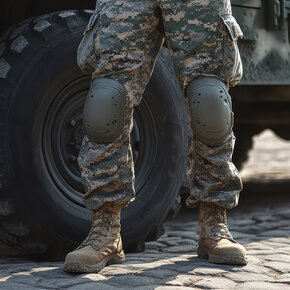
| Knee protection | Knees | CQB, urban en outdoor |
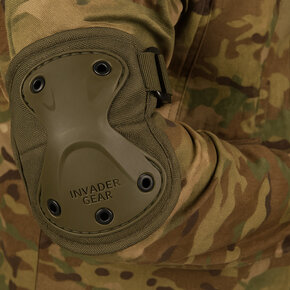
| Elbow protection | Ellebogen | CQB, obstacles and high-intensity movements |
Although eye protection is always compulsory, the ideal combination varies from player to player and depending on the playing environment. A CQB player often has different requirements for their kit than someone who mainly plays long outdoor skirmishes or milsim events.
Airsoft safety goggles
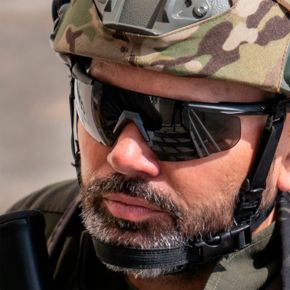
Safety goggles are the most popular choice for many players. They are lightweight, offer a wide field of vision and generally provide better ventilation than fully enclosed goggles. As a result, there is often less risk of misting, particularly during intense movement.
Safety goggles are widely used during both CQB and outdoor skirmishes, and can be combined perfectly with a separate mesh mask for extra protection of the mouth and teeth.
Airsoft goggles
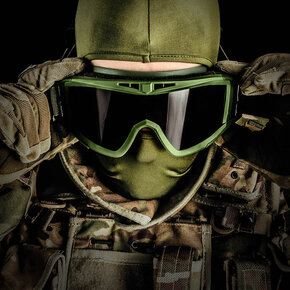
Goggles completely cover the eyes, making them an excellent choice for players who want maximum protection against BBs, dust, sand and twigs during outdoor and milsim events.
Due to their sealed design, goggles can be slightly more prone to fogging than safety glasses. Many modern models therefore feature ventilation openings, anti-fog coatings or even active fans to keep the view as clear as possible.
Mesh masks
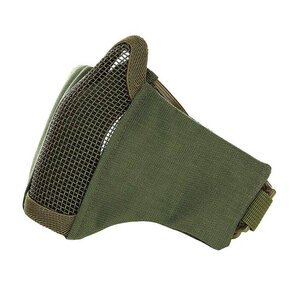
A mesh mask primarily protects the mouth, teeth, nose and jaw from direct BB impacts. A hit to the teeth in particular can have unpleasant and costly consequences, which is why many experienced players routinely opt for a combination of safety goggles and a mesh mask.
It is important to note that a mesh mask does not provide eye protection. The metal mesh is intended solely to protect the lower part of the face and must therefore always be worn in conjunction with certified safety spectacles or goggles.
Full-Face Masks
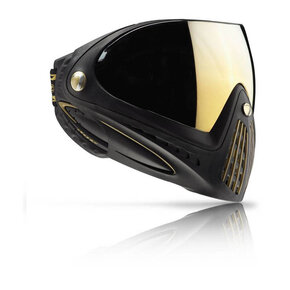
A full-face mask combines eye and face protection in a single unit. The eyes, nose, mouth, teeth and, often, part of the jaw are fully protected, making this type of protection particularly popular amongst novice players, CQB players and rental venues.
As a full-face mask forms a single, enclosed system, you don’t need to combine separate safety goggles and a mesh mask. This makes it easy to use and prevents parts from shifting whilst playing.
One point to bear in mind is that a full-face mask is often slightly larger and heavier than separate safety goggles with a mesh visor. Ventilation may also be more limited, making some models more prone to fogging. Modern masks therefore increasingly make use of ventilation openings, dual lenses and anti-fog coatings to keep the view as clear as possible.
Here too, it is important to check the certifications of the safety lenses.
Safety standards explained
Not all safety glasses are suitable for airsoft. A pair of glasses may look like tactical eye protection, but without the correct certification, it cannot be determined whether they can withstand the impact of a BB. That is why it is important not only to consider the appearance or price, but above all the safety standards that a pair of glasses or goggles meets.
Manufacturers have their products tested in accordance with international standards. These certifications indicate the level of impact a lens or frame can withstand and the conditions under which the tests were carried out.
| Safety standard | Meaning | Test | Suitable for airsoft |
|---|---|---|---|
| EN166 F | European safety standard | High-impact (45 m/s) | Limited |
| EN166 B | European safety standard | Medium-high impact (120 m/s) | Ja |
| EN166 A | European safety standard | High impact (190 m/s) | Ja |
| ANSI Z87.1+ | US safety standard | High-impact test | Ja |
| Military specification | US military standard | Ballistic test | Excellent |
| STANAG 2920 | NATO test method | Ballistic fragmentation test | Highly suitable |
It is important to realise that certifications are not intended as a marketing term, but as verifiable proof that a product has been tested under controlled conditions. You should therefore always check whether the certification is actually stated by the manufacturer and is not merely being used as promotional copy.
EN166
EN166 is the European standard for personal eye protection and is widely used for safety spectacles in industry, construction and tactical applications. This standard includes various impact classes that indicate the amount of energy a lens can withstand.
- EN166 F refers to a low-impact test in which a small steel ball is fired at the lens at a speed of 45 metres per second. Although some airsoft fields accept this standard, many players prefer a higher classification.
- EN166 B increases the impact velocity to 120 metres per second and offers a significantly higher safety margin. This is a commonly used classification for high-quality airsoft eye protection.
- EN166 A is the highest impact class within this standard. Testing is carried out at a speed of 190 metres per second and the protection is suitable for very heavy mechanical stress.
Although EN166 is recognised worldwide, some airsoft fields have additional requirements. You should therefore always check the rules of the airsoft field where you are playing.
ANSI Z87.1+
ANSI Z87.1+ is the American standard for safety eyewear and is widely used by manufacturers of tactical and military eye protection. The addition of "+" indicates that the product has passed the more rigorous impact tests.
During these tests, both the lens and the frame are subjected to impact tests to check that the glasses remain intact and provide adequate protection for the eyes. As a result, you’ll often find this certification among reputable brands that cater to shooting sports, the armed forces, the police and airsoft.
ANSI Z87.1+ is regarded worldwide as a reliable safety standard and is an important quality indicator for many people when purchasing new eye protection.
Military specification
MIL-PRF-32432A is a US military specification for ballistic eye protection. This standard was developed for the US armed forces and sets significantly higher requirements for eye protection than many standard industrial safety standards.
During the test, the focus is not only on whether the lens can withstand an impact, but also on whether the entire system – including the frame – continues to provide protection under harsh conditions. In addition, aspects such as optical quality, durability and reliability are taken into account in the assessment.
Many premium brands used by the armed forces, the police and special forces have their products tested in accordance with this military standard. For airsoft players, this means that glasses or goggles with this certification are designed for situations where maximum protection is essential.
STANAG 2920
STANAG 2920 is not a traditional safety standard such as EN 166, but a NATO test method used to determine the ballistic resistance of protective materials. This test is used worldwide for military eye protection, helmets, visors and other personal protective equipment.
During the test, small fragments are fired at the lens at progressively higher speeds. The aim is not simply to determine whether a projectile pierces the lens, but to establish the so-called V50 value.
The V50 value indicates the speed at which approximately 50 per cent of projectiles will still penetrate the material and 50 per cent will not. The higher this value, the greater the ballistic resistance of the lens.
That is why STANAG 2920 is often found in high-quality military eyewear from manufacturers such as Bollé, Wiley X, ESS, Revision and Oakley. These products have been developed for use in situations where protection against flying debris and other projectiles can be a matter of life and death.
Although airsoft BBs behave differently from the fragments used in STANAG 2920 testing, this certification does provide a good indication of the robustness of the materials used. For many experienced airsoft players, STANAG 2920 is therefore an important quality indicator when choosing new eye protection.
Safety goggles, goggles or a full-face mask?
Every type of eye and face protection has its own advantages. The best choice depends on your playing style, personal preference and the conditions in which you play.
| Property | Safety goggles | Goggles | Full-Face Masks |
|---|---|---|---|
| Eye protection | ✔ | ✔ | ✔ |
| Face protection | ✖ | ✖ | ✔ |
| Ventilation | Excellent | Goed | On average |
| Risk of condensation | Laag | On average | On average |
| Field of view | Very large | Groot | Goed |
| Suitable for CQB | ✔ | ✔ | ✔ |
| Suitable for outdoor use | ✔ | ✔ | ✔ |
Safety goggles are ideal for players who prioritise maximum ventilation, a lightweight design and a wide field of vision. When combined with a mesh mask, this is the most popular set-up amongst experienced airsoft players.
Goggles provide fully enclosed protection around the eyes and are popular during outdoor skirmishes, in wooded areas and at milsim events where extra protection against dust, sand and branches is required.
A full-face mask combines eye and face protection in a single system and is an excellent choice, particularly for novice players, CQB venues and hire kits.
Mesh mask or full-face mask?
Many players are unsure whether to choose a loose mesh mask or a full-face mask. Both protect the face, but differ significantly in terms of ease of use and scope of application.
A mesh mask protects your mouth, teeth, nose and jaw, whilst allowing you to choose which safety glasses or goggles to wear with it. This gives you the benefit of better ventilation, a lighter weight and a flexible system that can be easily adapted to your personal preferences.
A full-face mask combines all the protective elements into a single unit. This reduces the risk of parts shifting out of place and means you don’t have to put together a separate combination of components. That makes a full-face mask particularly suitable for novice players and high-intensity CQB matches.
Whatever choice you make, one rule always applies:
A mesh mask is never a substitute for safety spectacles or goggles. Eye protection is always essential.
Which lens colour will you choose?
It is not only the quality of the lens that is important, but also its colour. The right lens colour can enhance contrast, reduce eye strain and significantly improve vision in a variety of lighting conditions.
| Lens colour | Ideal conditions |
|---|---|
| Clear | Indoors, cloudy weather and general use |
| Geel | Wooded surroundings, fog and dark days |
| Plowing | Twilight and changing light conditions |
| Smoke | Sunny days and open countryside |
A clear lens is the most versatile choice and is used at most indoor CQB venues. As it blocks virtually no light, visibility remains optimal in dark buildings and in cloudy weather.
A yellow or orange lens increases contrast, making uneven terrain and movement amongst the trees more visible. That is why these colours are popular during outdoor skirmishes in wooded areas.
A smoke lens reduces the amount of bright sunlight and prevents eye strain on sunny days. Mirrored lenses go one step further and are particularly useful in very bright light or during prolonged exposure to the sun.
The ideal lens colour therefore does not depend on the quality of the glasses, but on the conditions in which you play. Many experienced players therefore have several interchangeable lenses, so that they can easily adapt their eye protection to the weather and the playing environment.
Why do some spectacles and goggles fog up?
Almost every airsoft player has to deal with it sooner or later: fogged-up lenses. Condensation can significantly impair your vision, particularly during intense skirmishes, on hot summer days or on cold winter mornings. Not only is this annoying, but it can also affect your safety and your ability to react.
Condensation forms when warm, moist air comes into contact with a colder lens. When running, kneeling or sprinting, your body generates more heat and you breathe more rapidly. The combination of body heat, perspiration and poorly ventilated glasses or goggles causes moisture to build up on the inside of the lens.
Fully enclosed goggles and full-face masks are particularly susceptible to this, more so than open-frame safety glasses. However, that does not mean that goggles are a poor choice; modern models are, in fact, designed to minimise this problem as much as possible.
You can reduce condensation by:
- to choose a model with good ventilation;
- to use an anti-fog coating or anti-fog spray;
- choosing the right fit so that air can circulate properly;
- not to take your glasses off unnecessarily during breaks, as this can cause temperature differences;
- For intensive use, opt for goggles with active ventilation (fan goggles).
Although no system is completely fog-free in all circumstances, high-quality spectacles and goggles make a significant difference compared with cheap models that lack ventilation or an anti-fog treatment.
Many experienced airsoft players take a microfibre cloth and some anti-fog spray with them on longer gaming days. This allows you to quickly clean the lens during a break, ensuring your vision remains optimal without damaging the coatings on the glasses.
Maintenance of eye protection
Proper maintenance not only extends the lifespan of your eye protection, but also ensures that the lens retains its optical quality. A damaged or heavily scratched lens can impair your vision and, in some cases, even compromise its protective properties.
You should therefore always clean your safety spectacles or goggles with care.
First rinse off any dust, sand or mud with clean water before wiping the lens. If you wipe a dirty lens with a cloth straight away, tiny grains of sand could cause deep scratches.
Next, use a clean microfibre cloth or a special lens cloth to dry the glasses. Avoid harsh cleaning products such as glass cleaner, solvents or alcohol-based products if the manufacturer advises against them. These products may damage coatings or the plastic.
Check your eye protection regularly for:
- deep scratches;
- cracks in the lens;
- damage to the frame;
- worn-out elastic bands;
- loose parts.
If you notice any damage that could affect safety or your vision, replace the lens or the entire pair of glasses immediately. Good eye protection is a safety product and not something you should take any risks with.
Knee and elbow protection
Although eye protection is the top priority, many experienced players regard knee and elbow pads as an essential addition to their kit.
During CQB, you’re constantly moving from cover to cover. This involves regularly kneeling on concrete, paving slabs or gravel. During outdoor skirmishes, too, you’ll encounter tree roots, stones and uneven surfaces that put strain on your joints.
Good knee protection:
- reduces the strain on your knees;
- prevents painful knocks;
- quickly makes kneeling more comfortable;
- provides greater confidence during aggressive movements.
Elbow protection offers similar benefits when shooting from cover, climbing over obstacles or crawling a lot during milsim events.
For players who regularly take part in longer skirmishes, knee and elbow pads are often not a luxury but an investment in comfort and mobility.
Professional applications
Eye and face protection is not only used in airsoft. Professionals also rely on high-quality protective equipment every day to enable them to work safely in high-risk environments.
Examples include:
- Defence;
- Police;
- Security services;
- Force-on-force training sessions;
- Shooting instructors;
- Tactical training centres;
- Emergency services.
During training sessions involving blank ammunition, Simunition or other projectiles, reliable eye protection is essential. That is why many professional users opt for goggles and safety glasses that comply with military standards such as MIL-PRF-32432A or have been tested in accordance with STANAG 2920.
The same technology and materials are increasingly finding their way into the airsoft world. This means that recreational players can also benefit from high-quality protection designed for professional use.
What should you look out for when choosing eye and face protection?
The right choice depends on your playing style, the environment in which you play and your personal preference. However, there are a number of points that every player should check before buying new eye protection.
Please note, amongst other things:
- Always choose eye protection that meets a recognised safety standard.
- Check that the manufacturer clearly states the certification.
- Ensure a comfortable fit without any pressure points.
- Choose a lens colour that suits the conditions in which you’re playing.
- Make sure the goggles have good ventilation and anti-fog properties.
- Check that the glasses work well with a helmet or headset.
- Wear a mesh mask if you also want to protect your teeth and jaw.
- Buy from a reputable specialist who only stocks products from well-known brands.
The cheapest option is rarely the best choice. A high-quality pair of safety glasses or goggles will last for years and give you the peace of mind that your eyes are protected when it really matters.
Common mistakes regarding eye and face protection
The same mistakes are often made when purchasing and using eye and face protection. By bearing the following points in mind, you will not only improve your own safety, but also avoid unnecessary risks during a skirmish.
- Buying cheap, non-certified eye protection. Products without a verifiable safety standard often resemble professional models, but offer no guarantee that the lens can withstand the impact of an airsoft BB.
- Relying on the appearance of a pair of glasses. A product marketed as tactical, military or airsoft is not automatically safe. Always check that the manufacturer clearly states the relevant certifications.
- Wear a mesh mask only. A mesh mask protects your teeth and jaw, but offers no protection whatsoever for your eyes. Always wear a mesh mask in combination with certified safety spectacles or goggles.
- Continuing to use damaged or scratched lenses. Deep scratches impair vision and can negatively affect the lens’s strength. Replace damaged lenses or eye protection in good time.
- Choosing the wrong lens colour. A smoke lens is ideal in bright sunlight, but impairs vision in dark CQB locations or wooded playing fields. Choose the lens colour to suit the conditions.
- Accepting a poor fit. Eye protection must fit snugly against the face without any gaps that might cause discomfort. Glasses that slip whilst playing offer less reliable protection.
- Incorrect maintenance of eye protection. Clean lenses with a microfibre cloth and rinse off any dirt or sand first to prevent scratches. Avoid harsh cleaning products that could damage the coatings.
- Failure to take the playing field’s requirements into account. Not every airsoft field has the same rules. Always check in advance which safety standards are accepted.
- Waiting too long to invest in proper eye protection. Replicas and kit can always be upgraded later. Eye protection should be your top priority right from your very first skirmish.
Frequently Asked Questions
What safety standard do I need for airsoft?
For airsoft, it is recommended that you choose eye protection that meets a recognised safety standard such as EN166 B, EN166 A, ANSI Z87.1+, MIL-PRF-32432A or STANAG 2920. You should also always check the rules of the airsoft field where you are playing.
Are safety glasses better than goggles?
That depends on your playing style and personal preference. Safety glasses often offer better ventilation and a wider field of vision, whilst goggles completely enclose the eyes and provide extra protection against dust, sand and twigs.
Is a mesh mask sufficient?
No. A mesh mask only protects the mouth, teeth, nose and jaw. To take part safely in an airsoft match, you always need certified safety glasses or goggles.
Why do many players combine safety goggles with a mesh mask?
Safety goggles protect the eyes, whilst a mesh mask protects the teeth, lips, nose and jaw. This combination offers an excellent balance between protection, ventilation and comfort, and is therefore popular amongst both CQB and outdoor players.
What does STANAG 2920 mean?
STANAG 2920 is a NATO test method used to measure the ballistic resistance of protective materials. The V50 value indicates the velocity at which 50 per cent of projectiles penetrate the material and 50 per cent do not, thereby providing a good indication of ballistic protection.
Which lens colour is best?
That depends on the conditions in which you’re playing. Clear lenses are ideal for indoor and general use; yellow and orange lenses enhance contrast in dark environments; and smoke or mirror lenses are suitable for sunny conditions.
Why do goggles fog up more quickly?
Because goggles completely enclose the eyes, warm, moist air is more likely to become trapped inside them. Good ventilation, an anti-fog coating or active ventilation can help to significantly reduce fogging.
When should I choose a full-face mask?
A full-face mask is an excellent choice for beginners, CQB fields and anyone who wants to combine maximum protection for both eyes and face in a single system.
Does Airsoft Legends only sell certified eye protection?
Airsoft Legends selects its range based on quality, reliability and safety. That is why you will only find eye protection from reputable brands that comply with recognised safety standards.
Your eyes are irreplaceable. That’s why you should always invest in certified eye and face protection from reliable brands. Browse the Airsoft Legends range and choose the safety glasses, goggles, mesh mask or full-face mask that suits your playing style and environment.